In the life of ministry, there is a temptation that quietly seduces even the most sincere leaders: the belief that the quality of our public ministry is the truest measure of our spiritual health. The sermon delivered with eloquence, the congregation moved to tears, the growing attendance numbers, these become the metrics by which we judge ourselves and are judged by others.
But at Miz City Church in Lethbridge, Alberta, the leadership philosophy that has shaped the community for over fifteen years points to a different reality. Under the guidance of Daniel Zopoula, the church’s founder and lead pastor, there exists a foundational conviction: what happens in the secret place, the private devotions, the quiet moments of prayer, the unglamorous disciplines of study and fasting, matters infinitely more than what happens on the public platform.
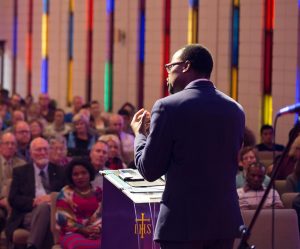
This is not merely a nice sentiment. It is a matter of spiritual survival.
The Link Between Personal Holiness and Ministerial Effectiveness
The CEEC tradition, which I, Daniel Zopoula serves as a Canadian archbishop, explicitly embraces the evangelical emphasis on “a personal relationship with Jesus Christ, a holy living, and evangelism and outreach” . This is not incidental to the work of ministry; it is the very foundation upon which effective ministry is built.
My website notes that congregations are searching for pastors who possess “a true faith that has been grown through the highs and lows of life, rather than perfection.” This kind of faith, is recognised for engaging in spiritual disciplines such as prayer, Bible study, worship, fasting, and other practises that help them grow in their relationship with Christ” . The logic is inescapable: a faith that has been cultivated in private is a faith that can be shared in public. A faith that has not been cultivated cannot be given away, no matter how polished the presentation.

The ancient principle lex orandi, lex credendi; the law of prayer is the law of belief, captures this reality. As the CEEC affirms, “our beliefs are inextricably linked to our activities, particularly prayer” . The leader who neglects private prayer while excelling in public preaching is, in a profound sense, living a contradiction. The prayer life shapes the preacher; the preacher does not substitute for the prayer life.
My own journey reflects this integration. Born in Burkina Faso and shaped by experiences of poverty and famine, my faith was forged in circumstances that demanded dependence on God rather than reliance on personal eloquence or charisma . That foundation, a faith tested and deepened through adversity, is what enables a leader to speak with authenticity rather than performance.
Guarding Against the “Celebrity Pastor” Temptation
The modern pastoral landscape is littered with cautionary tales. Leaders who built impressive platforms have watched those platforms crumble when the private life failed to match the public persona. The “celebrity pastor” temptation is not merely about ego, though ego plays its part. It is about the subtle exchange of substance for appearance, of depth for reach.
At Miz City Church, the structure of ministry itself serves as a guard against this temptation. The church’s leadership model emphasizes teams rather than individual figures. Pastoral care, prayer ministry, grief care, recovery ministry, global missions; these are all described as team-led initiatives, not the domain of a single charismatic leader . This distributed approach to ministry reflects a theological conviction: the church is a body, not a stage for one person’s gifts.

The CEEC’s convergence model blending evangelical, charismatic, and liturgical streams, also provides a structural corrective. In a tradition that values the Book of Common Prayer and the historic rhythms of worship, the leader is not the innovator-in-chief but a participant in something far older and larger. The liturgy reminds the pastor that they are not the main character in the story of the church.
My own words on the subject, shared in my reflections on the partridge chick that found safety under a surrogate wing, offer a poignant image: “We can have food, housing, and basic needs, yet we are so vulnerable, fragile, and lacking until we find our home, snuggled under His wing” . The leader who has not found that place of belonging under God’s wing will inevitably seek belonging elsewhere, in applause, in influence, in the dangerous comfort of being needed by others.
Creating Sustainable Spiritual Rhythms for Busy Leaders
The challenge for most ministry leaders is not a lack of desire for private devotion. It is the relentless press of demands: sermons to prepare, meetings to attend, crises to manage, people to care for. The urgent consistently crowds out the important. The result is a leader who is perpetually pouring out but rarely being filled.
The CEEC tradition offers a resource that many evangelical leaders overlook: the structured rhythms of liturgical prayer. The Book of Common Prayer, far from being a dry formality, provides a framework for daily Scripture reading, confession, thanksgiving, and intercession that does not depend on the leader’s creative energy or emotional state . When the well is dry, the liturgy still flows. When inspiration fails, the words of the saints carry the weary leader forward.
But sustainable rhythms require more than borrowed words. They require intentional boundaries. The temptation to be perpetually available, to respond to every message, to attend every event, to be the pastor everyone needs, is a fast track to burnout. The leader who does not guard time for solitude, for family, for rest, is a leader who will eventually have nothing left to give.
At Miz City Church, the emphasis on small groups and shared ministry creates space for the pastor to be human. As I have written before, these groups are “spiritual families where we can be real, find encouragement, and apply God’s timeless truth to our modern-day lives” . The leader who is known, supported, and prayed for by others is a leader who can sustain the work over the long haul.
The Hidden Foundation of Lasting Ministry
Our ministry in Lethbridge spans decades, from the founding of Bridges of Hope in the late 1990s to the establishment of Miz City Church in 2008 and its continued witness today. Such longevity is not accidental. It is built on a foundation that the public rarely sees.

The private devotions of a leader are not a luxury to be indulged when time permits. They are the hidden wiring that makes public ministry possible. They are the root system that sustains the tree through drought. They are the quiet place where the leader remembers, again and again, that they are not the savior of the church, that role belongs to Another.
The most effective sermon a leader will ever preach is the one they live in secret before they ever step into the pulpit. And the most important congregation they will ever address is the one that gathers in the silence of their own heart before God.
May every leader who reads these words find the courage to prioritize that hidden congregation, to nuzzle under the Wing that offers the only shelter strong enough to sustain a lifetime of sacred service.
Leave a Reply