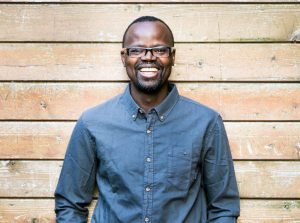
Minister, Author, Marriage Coach and Advocate

Author: Daniel20Zopoula_Lethbridge23 (Page 1 of 5)

Operating in the Gifts: How the Charismatic Stream Enlivens Liturgical Worship

In the Communion of Evangelical Episcopal Churches (CEEC), we often speak of the beautiful convergence of three streams: Evangelical, Sacramental/Liturgical, and Charismatic. Yet, for some, a question lingers: How does the spontaneous, often unpredictable operation of the Holy Spirit’s gifts fit within the structured, ordered beauty of the Book of Common Prayer? Far from being contradictory, this integration is the heartbeat of our worship.

hands together on a prayer book

As Archbishop of Miz City Church in Lethbridge, I share and teach the CEEC values and affirm that we are fully charismatic, just as we are fully liturgical and sacramental. This is not a compromise but a fulfillment, where the river of the Spirit flows powerfully within the ancient banks of liturgy.

The Liturgy as a Framework, Not a Fence

First, we must understand the liturgy correctly. It is not a rigid fence that imprisons the Spirit, but a sacred framework that gives our worship shape, depth, and theological grounding. The Book of Common Prayer, as we use it in the CEEC, connects us to the historic, apostolic faith and the “Great Tradition” of the Church.

But a framework is not a cage. As one theologian notes, to stifle anyone’s “gift,” no matter how “strange,” may be cheating the community of what God wants it to have. Our liturgy provides a secure home, a “plumb line” of biblical truth and historic practice, within which the Spirit’s gifts can operate safely, fruitfully, and for the common good. The goal is not a “religious free-for-all” but the nourishment and growth of the community through God working through persons.

The Charismatic Stream in Action

How, then, does this look in practice within a CEEC parish?

  1. A People of Expectancy: We gather not as spectators to a performance but as participants in a divine encounter. We are “receptive to the work of the Holy Spirit” and encourage our parishes to expect and welcome His involvement through spiritual gifts in our worship, service, and relationships. This expectancy is the posture of our hearts from the opening acclamation.
  2. Spontaneous Within the Script: The operation of charismatic gifts is best understood as a semi-scripted improvisational activity, similar to a skilled jazz musician creating new, beautiful music within the structure of a song. For example:
  • Times of Ministry: During the Prayers of the People or after the sermon, there may be times set aside for congregational members to share a prophetic word, a word of knowledge, or to pray for healing, always in submission to the leadership and the Word of God.
  • Spontaneous Praise: The music and singing, which can include both rich historic hymns and contemporary expressions, is a prime vehicle for the Spirit. As one source notes, the congregational music itself is seen as a means of expressing the “charismatic Spirit” . At Miz City Church, this reflects the CEEC vision that worship music should “represent both the rich tradition of the historic faith and the contemporary expressions of praise to the Lord”.
  • A Space for the Spirit’s Nudge: A bishop or celebrant, free in the Spirit, may feel led to extend a portion of the liturgy, adjust a prayer, or call for a time of silence for the Spirit to speak. This is not a disruption but a “listening and playing along” with the faithful guidance of the Holy Spirit.

Lex Orandi, Lex Credendi: The Law of Prayer is the Law of Belief

This integration is not an optional add-on. Our worship shapes our theology. When we pray a structured liturgy while being open to the Spirit’s gifts, we are teaching ourselves and our congregation a profound truth: God is both the God of order and the God who “breathes where He wills”. We are declaring that the Christian life is a life “in and through the Spirit”.

A Vision of Unity

Perhaps the most powerful aspect of this convergence is its witness to Christian unity. In a world that often forces a choice between structure and spontaneity, between tradition and experience, the CEEC offers a third way: both/and. As Archbishop Zopoula’s vision demonstrates, we can have the deep, historical roots of the liturgical tradition and the vibrant, life-giving power of the charismatic stream, flowing together as one mighty river.

This is not just a style of worship; it is a theology of transformation. It is the conviction that the same Spirit who hovered over the waters at creation, who filled the apostles at Pentecost, and who has been poured out on the Church for two millennia, is present and active in our worship today, making us more fully the Body of Christ. At Miz City Church and throughout the CEEC, we are committed to this “high-risk worship,” where we are freed to operate in the gifts and enliven the liturgy for the glory of God and the building up of His Church.

Sacramental Evangelism: How Baptism and Eucharist Proclaim the Gospel

As a community within the Communion of Evangelical Episcopal Churches (CEEC), we stand at a unique and vibrant crossroads of Christian tradition. We are a convergence movement, embracing the fullness of the Church’s history, the authority of Scripture, the personal relationship with Jesus Christ emphasized by evangelicals, and the ancient, life-giving rhythms of liturgical worship .

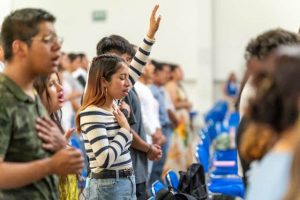
church congregation members holding hands

This unity is not merely a bureaucratic agreement. It is a lived reality that finds its most profound expression in our worship, particularly in the sacraments of Baptism and the Eucharist. In a world that often feels fragmented and disconnected, embodied worship offers a powerful, tangible proclamation of the Gospel. It is here, through water, bread, and wine, that we preach Christ, prepare converts for a new way of living, and unleash the evangelistic power of a faith that can be seen, touched, and tasted.

Preaching Christ Through Liturgical Worship

Our worship is a proclamation. When we gather, we are not merely performing a ritual; we are making a public statement of faith. This is the heart of the ancient principle, lex orandi, lex credendi, the law of prayer is the law of belief. We believe what we pray, and our prayers shape our belief.

At the center of our liturgy stands Christ crucified and risen. When we recite the Nicene Creed, we are not simply reciting historical facts; we are declaring our allegiance to the King of Kings. When we celebrate the Eucharist, we proclaim the Lord’s death until He comes. The Eucharist is a visible sermon, an embodied Word that speaks of sacrifice, forgiveness, and a new covenant. It is the gospel dramatized, made tangible for every person in the congregation. This embodied worship is a central part of the evangelistic character of the Church, forming the people of God to live out the gospel in the world.

Preparing Converts for Sacramental Living

The journey into this sacramental life is not a one-time decision but a process of transformation. This is why we, like the early Church, emphasize a period of preparation for those coming to faith, a modern-day catechumenate. The goal is not just to teach them about God but to immerse them in the life of faith.

open bible on a stone

Converts are welcomed into a community where they learn to live out their new identity. They are formed by the Word of God and the prayers of the Church. This process, much like the nurturing of a hatchling under a mother’s wing as described in my own reflections, is about finding a new home. Our faith guides us in a new way of life. It is in the context of a supportive community, where they witness lives of charity, hope, and unity, that their faith is strengthened and matured. The sacraments are the culmination of this journey, and once received, they become the ongoing nourishment for a life of discipleship.

The Evangelistic Power of Embodied Worship

There is a profound evangelistic power in the fact that our worship is embodied. As the CEEC, we understand that the Word of God not only rings in the air but also reaches out to touch us. This is the heart of the sacramental vision: our faith is not just a mental assent but a physical reality.

When we baptize, we proclaim that our sins are washed away. When we share the Eucharist, we proclaim that Christ’s body was broken for us. These acts are “sacraments of faith” that nourish, strengthen, and express our belief. They are a powerful witness to a world that is skeptical of mere words. This is the convergence of the spiritual and the physical that Robert Webber spoke of; our participation in liturgy is itself a means for evangelization. The story of God’s salvation is sung, prayed, and tasted, inviting seekers to “come and see” a faith that is alive in the community of believers.

Conclusion

woman submerged in baptism

In the Communion of Evangelical Episcopal Churches, we are not simply maintaining a tradition; we are living a mission. Our sacramental worship is a dynamic, evangelistic force. Through Baptism and the Eucharist, we preach Christ, we form His disciples, and we build a community that embodies the good news of His Kingdom. This is the power of our convergence, a faith that is deeply rooted and dynamically alive, ready to share the hope of Christ with Lethbridge and the world.

Faith in Action: The Biblical Mandate for Humanitarian Work

I remember sitting with a group of community leaders a few years back, trying to explain why our church was involved in international development work. Someone asked me, “Isn’t that a bit outside the scope of what a church should be doing? Shouldn’t we stick to preaching?”

I understood the question. I really did. But here’s what I’ve come to realize over the years of working with Bridges of Hope: caring for the poor, the widow, and the orphan isn’t an add-on to the Christian life. It’s the very heart of it.

Daniel zopoula

You see this throughout Scripture. It’s not something you can brush aside if you’re serious about following Christ.

What the Bible Actually Says

The Old Testament is pretty clear about this stuff. God’s law included specific instructions to leave the edges of fields unharvested so the poor could gather food (Leviticus 19:9-10). The prophets weren’t exactly gentle about it either. Isaiah 1:17 commands us to “learn to do right; seek justice and correct the oppressor. Defend the fatherless and plead the case of the widow.

God doesn’t just suggest we care about vulnerable people. He identifies Himself with them. Deuteronomy 10:18 describes God as one who “executes justice for the fatherless and widow, and loves the foreigner, giving him food and clothing.” When we’re helping the marginalized, we’re actually participating in what God Himself is doing.

I think about that verse a lot when I see the work Bridges of Hope does in communities around the world—battling illiteracy, improving healthcare, helping families escape the kind of poverty I witnessed growing up in Burkina Faso. This isn’t just charity. It’s joining God in His work.

The New Testament Gets Even More Direct

If the Old Testament lays the foundation, the New Testament builds the house on top of it. Jesus Himself said in Matthew 25:40, “Truly I tell you, whatever you did for one of the least of these brothers of Mine, you did for Me.” That’s a pretty stunning statement. When we help someone in need, we’re doing it for Christ.

The early church understood this. Acts 6 describes how they appointed deacons specifically to ensure widows were being properly cared for. They didn’t treat humanitarian work as separate from their spiritual mission. It was the same thing.

This Is What True Religion Looks Like

Here’s where it gets really personal. James 1:27 says, “Pure and undefiled religion before our God and Father is this: to care for orphans and widows in their distress, and to keep oneself unstained by the world.

volunteer receiving donations

This verse used to make me uncomfortable. I’d read it and think, “Well, James is probably exaggerating for effect. There must be more to religion than that.” But you know what? He’s not saying this is the only thing that matters. He’s saying this is the proof. If your faith doesn’t lead you to care for vulnerable people, something’s wrong.

I’ve seen this play out in real life. People who come to faith and start serving others—whether through their local church, through Bridges of Hope, or just by helping a neighbor—they grow in their faith in ways that sitting in a pew never could. There’s something about putting your faith into action that makes it real.

Practical Application in Our Community

This isn’t just theoretical. In Lethbridge, we have opportunities every day to live this out. It might mean supporting a food bank, volunteering time, or giving financially to organizations that are making a difference. Our church has partnered with local groups to address food insecurity, homelessness, and support for single parents.

Through Bridges of Hope, we’ve seen what happens when this biblical mandate meets practical action. Thousands of children have been educated. Millions of meals have been delivered. But more than that, communities have been transformed because people actually did what Scripture commands.

The Bottom Line

I’m not a perfect person. I stumble and fall short all the time. But I keep coming back to this: the Bible doesn’t give us an option to ignore the poor, the widow, the orphan, or the foreigner. God’s heart is clearly, unmistakably with the vulnerable. And if we claim to follow Him, our hearts better be there too.

Sometimes people ask me why we spend so much energy on humanitarian work at Miz City Church. My answer is simple: because God does. Because Jesus did. Because James said this is what pure religion looks like.

So whether you’re serving through a global organization like Bridges of Hope or just helping a neighbor in need, know that you’re doing exactly what God has called you to do. You’re putting your faith into action. And that’s something I believe He smiles on.

people on road in burkinafaso

The Three Streams: Why We Blend Tradition, Spirit, and Scripture

In a world of either/or, many of us are searching for a both/and faith.

Here in Lethbridge, we see it all the time: the believer who loves the quiet reverence of ancient liturgy but craves the Bible-teaching depth of an evangelical small group. The worshipper who longs for the spontaneous move of the Holy Spirit but doesn’t want to abandon the prayers that have sustained the church for two thousand years.

For too long, Christians have been told to choose.

Choose between high church and low church. Between Word and Spirit. Between structure and freedom.

But what if you didn’t have to?

The Vision of the Three Streams

I believe the fullest expression of Christian faith flows from three great streams, not competing, but converging.

Stream One: Tradition (The Liturgical/Episcopal Stream)

This is the stream of ancient rhythms: the church calendar, the daily office, the Eucharist as the center of worship. It’s the “smells and bells,” yes, but more deeply, it’s the wisdom of those who came before.

The liturgical stream reminds us that we are not the first generation to follow Jesus. The collects, creeds, and prayers of the people anchor us in something bigger than our feelings or our era. In a world of novelty addiction, tradition offers stability. The Book of Common Prayer isn’t a straitjacket, it’s a trellis for the vine of faith to grow.

From this stream, we learn reverence, patience, and the beauty of holy habits.

Stream Two: Scripture (The Evangelical Stream)

The evangelical stream holds the Bible as the supreme authority for faith and practice. No experience, no matter how powerful, contradicts the written Word. No tradition, no matter how ancient, supersedes the prophetic and apostolic witness.

This means expository preaching, personal Bible study, and a high view of God’s revelation. It means Scripture reading as the non-negotiable foundation for every Sunday gathering. It means loving the text enough to let it challenge us, correct us, and shape us.

From this stream, we learn truth, discipleship, and the courage to say, “It is written.”

Stream Three: Spirit (The Charismatic/Pneumatic Stream)

The charismatic stream opens the door to the active, present-tense work of the Holy Spirit. Not as an afterthought, but as the one who animates the whole body. This means expecting the Spirit to speak, heal, empower, and distribute gifts freely, without embarrassment or excess.

This stream doesn’t reject order, but it refuses to quench the Spirit. It makes space for prophecy, prayer for healing, spontaneous worship, and the joyful freedom of the children of God.

From this stream, we learn expectation, wonder, and the reality that God is not silent.

Why Lethbridge Needs a Three-Stream Faith

Our city is diverse, academics from the University of Lethbridge, farmers from the surrounding county, young families in new subdivisions, and longtime residents who remember when the bridge was just a bridge. In that mix, we need a faith broad enough to hold different temperaments and deep enough to challenge all of them.

A purely liturgical church can become a museum. A purely evangelical church can become a lecture hall. A purely charismatic church can become a fireworks display.

river flowing surrounded by trees

But the three streams together? That’s a river.

What This Looks Like on a Sunday Morning

Imagine a service that begins with ancient words of confession from the Book of Common Prayer, then transitions into a forty-minute verse-by-verse teaching from the Gospel of John. Imagine a Eucharist celebrated with reverence, followed by an open prayer time where anyone can share a word of prophecy or a testimony of healing. Imagine hymns from the fourth century and songs from Bethel Music in the same gathering.

Practical Ways We Live the Three Streams

  • Weekly Eucharist from the Anglican prayer tradition
  • Expository preaching that works through books of the Bible, not just topics
  • Prayer teams available after every service for Spirit-led ministry
  • Daily Scripture reading plans with ancient and modern readings combined
  • Sober charismatic expression, no chaos, no control; just freedom with order
  • Seasonal observances (Advent, Lent, Eastertide) alongside spontaneous revival gatherings

A Caution and an Invitation

Blending streams isn’t easy. The high-church person may find the Spirit-stream too emotional. The evangelical may find the liturgy too formal. The charismatic may find the Bible teaching too long.

But here’s the truth: discomfort is often the doorway to growth.

What we offer isn’t a perfect system. It’s a humble experiment in holding together what God never intended to be torn apart. Scripture, tradition, and Spirit are not enemies. They are gifts from the same hand.

For Lethbridge Newcomers and Longtimers Alike

Whether you grew up in a pew or have never owned a Bible, whether you speak in tongues or don’t know what that means, whether you love the smell of incense or prefer a guitar on a concrete floor, you are welcome here.

We don’t expect you to have it all figured out. We just expect you to show up thirsty.

Because the same Spirit who hovered over the waters in Genesis, who inspired the prophets, who filled the upper room at Pentecost, that Spirit is still flowing. And where He flows, dead things come alive.

Let the three streams become one river in your life.

The Lost Art of Biblical Hospitality: How to Create a Welcoming Church

You know, I’ve been thinking a lot lately about the word “hospitality.” It’s one of those words we throw around a lot in church circles. We have our “hospitality teams” and our “coffee hours.” We might even have a greeter at the door on Sunday mornings. But if we’re honest, I think we’ve lost something. We’ve traded the deep, biblical, soul-stretching command to welcome the stranger for a shallow version that’s more about etiquette than the Gospel.


In our evangelical Episcopalian tradition, we talk a lot about the Via Media, the middle way. But when it comes to hospitality, there is nothing “middle-of-the-road” about what God asks of us. It’s radical. It’s dangerous. And honestly? It’s one of the most powerful ways we can be the hands and feet of Jesus right here in Lethbridge.


The Tent Door and the Empty Tomb: A Theology of Welcome

To really understand hospitality, we have to go back to the beginning. The foundational story for us isn’t just a polite welcome; it’s a divine encounter. I’m talking about Abraham in Genesis 18.


There he was, sitting at the entrance of his tent in the heat of the day. He saw three men standing nearby, and he didn’t just wave. He ran to meet them. He bowed low to the ground and begged them to stay . He offered water to wash their dusty feet—a dirty, humble job—and promised a “little bread” to refresh them. But then he ran to Sarah, to the servant, and prepared a feast: fresh cakes, a tender calf, curds and milk .


Abraham didn’t know it at first, but the writer of Hebrews tells us what was really happening: he was entertaining angels unaware (Hebrews 13:2). Some of the early church fathers even saw in this a prefiguring of the Trinity, a glimpse of the divine community welcoming us in . The point is, our hospitality is always a response to God’s hospitality toward us. God is the ultimate host, the one who spreads a table in the wilderness. When we open our doors, we are inviting people into that divine presence.


Fast forward to the Gospels, and we see that Jesus was either going to a party, leaving a party, or being criticized for being the wrong kind of guest at a party. He was constantly reclining at tables with tax collectors and sinners, with Pharisees and outcasts . In Luke 14, he turns the whole concept of the guest list on its head, telling us to invite the poor, the crippled, the lame, and the blind—those who could never repay us . That’s not just a nice potluck idea. That’s a kingdom revolution.
And then, of course, there’s the early church. The Book of Acts shows us that the church didn’t grow because they had a great building or a dynamic speaker (though they had the ultimate one in the Spirit). It grew because they broke bread in their homes and ate together with “glad and generous hearts” (Acts 2:46). When Paul traveled, he depended on the hospitality of strangers like Lydia, the jailer in Philippi, and Mnason, an “early disciple” in Cyprus . The Gospel literally traveled on the rails of open homes and open hearts.


What Happened to Us?


So, if this is our heritage, why do so many of our churches feel like the coldest place in town to be a stranger? Somewhere along the way, we built buildings with big sanctuaries and small hearts. We created a “greeter ministry” that functions more like a security check than a welcome. We stand in the back and talk to our friends, oblivious to the family standing awkwardly by the coffee urn, trying to figure out if the coffee is free.


At our church context here in Lethbridge, we have to ask ourselves: Are we a fortress for the found, or a hospital for the hurting? An evangelical Episcopalian church should be a place where the beauty of our liturgy and the urgency of the Gospel meet in a tangible embrace. Our worship is a foretaste of the heavenly banquet . But if we can’t even say hello to someone before the service, they’ll never get a taste of that heavenly reality.

So, how do we get back to Abraham’s tent? How do we recover this lost art?

Practical Ways to Create a Truly Welcoming Church in Lethbridge

This isn’t about a program. It’s about a mindset shift. It’s about seeing every single person who walks through our doors—whether it’s for a Christmas Eve service or a random Sunday in February—as a divine appointment. Here are a few ideas, some of which we’re trying, and some we need to get better at:

1. Ditch the “Insider Language.”


We Episcopalians are great at this—unintentionally. We talk about the “Narthex,” the “Rector,” and “Coffee Hour” like everyone knows what those words mean. They don’t. And our bulletins can look like a top-secret government document. We need to explain things simply. Put a slide up before the service that says, “The book in the pew is called the Book of Common Prayer. We’re on page 355. When we sing, you can just listen if you want.” Demystify the mystery so people can actually encounter it.

2. Move Greeters from “Doormen” to “Concierges.”


Anyone can hold a door open. But a true greeter scans the parking lot for a car with out-of-province plates. They notice the young mom struggling with a diaper bag and a toddler. They don’t just point to the nursery; they walk her there, introduce her to the nursery volunteer by name, and maybe even offer to carry the diaper bag . It’s the difference between “Hello” and “How can I help you find what you’re looking for?”

3. Reimagine Coffee Hour.


Coffee hour should not be a member-only reception. Move the coffee and cookies to the center of the room, not against the wall. Put out small, round tables instead of long, rectangular ones. Long tables are for committees; round tables are for conversation. And here’s a radical thought: assign one or two families each week to be “official welcomers” at coffee hour. Their only job is to stand away from the coffee, spot someone they don’t know, and go talk to them. It’s awkward at first, but it changes everything.

4. Create Pathways, Not Walls.


When a guest comes, we often just hope they figure it out. We need clear “on-ramps” . That means a designated, easy-to-find info table. It means having a simple, beautiful card for them to fill out that doesn’t demand they join a committee. It means actually following up with them—not with a pushy sales pitch, but with a personal note from the priest or a lay leader that says, “It was a gift to have you with us. If you have any questions about the service, just reply to this email. I’d love to buy you a coffee.” .

5. Practice the Stewardship of Interruption.


This is the hardest one. It means that when you’re walking to your seat, and you see someone standing alone, you stop. You interrupt your own plans, your own desire to chat with your buddy, and you welcome the stranger. It’s inconvenient. It’s exactly what Jesus would do.


The Welcome of God


My prayer for us is that we would stop being a club and start being a family. A family that is so caught up in the extravagant, undeserved welcome we’ve received from God through Jesus Christ that we can’t help but throw our own tent doors wide open.


When we wash feet, like Abraham, we meet God. When we set an extra plate at the table, like Jesus, we proclaim the Kingdom. And when we open our homes and our hearts to the stranger here in Lethbridge, we just might find that we have welcomed the One who welcomes us all.

Grace and peace to you as you go and do likewise.

    Digital Asceticism: Christian Wisdom for the Social Media Age

    Grace and peace to you from God our Father and the Lord Jesus Christ.

    I’ve been thinking a lot lately, here in Lethbridge, about the spiritual state of our hearts. Not just the big, obvious things, but the quiet, daily condition of our inner life. And I keep coming back to a image from a few years ago, one I’ve shared with our congregation at Miz City Church before. It’s the story of that little partridge, the one that lost its mother and spent its first days alone, under a lamp, being fed by hand. It survived, it grew, but it wasn’t until it found its place, nestled under the wing of a hen, that it truly found its home. It stopped its frantic pushing and nuzzling and was finally at rest.

    I think that little bird is a picture of so many of us today. We are surviving. We are being fed—by notifications, by newsfeeds, by the endless stream of content. But we are not at rest. We are not home. We are searching for that warm, sheltering wing, and too often we try to find it in the glowing screen in our pocket.

    We live in what I’ve come to call the Social Media Age. And it presents a unique challenge to our ancient faith. The Communion of Evangelical Episcopal Churches, which I’m blessed to be a part of, holds fast to the Great Tradition—the faith handed down through the apostles, affirmed in the Nicene Creed, and shaped by the wisdom of saints who have gone before us. But how do we live out that faith, that “personal relationship with Jesus Christ” we cherish as evangelicals, in a world that is constantly shouting for our attention? A world designed to keep us scrolling, comparing, and wanting?

    This is where I believe we need to recover an old, somewhat forgotten practice: asceticism. Now, before you click away, thinking I’m about to tell you all to go live in a cave in the Crowsnest Pass, hear me out. Asceticism isn’t about hating the world God made. It’s about training. It’s the spiritual discipline of saying “no” to some things so that we can say a louder, more joyful “yes” to the one thing that matters most: God himself.

    Think of it like this. Our faith isn’t just a set of beliefs in our head. It’s shaped by our actions, especially our prayer. If our constant action is scrolling, our inner life will be shaped by anxiety, comparison, and a hunger for validation. We start to believe that our worth is measured in likes. We start to pray to the god of the algorithm, checking for its favour every few minutes. That’s a form of spiritual formation, just a very bad one.

    Digital asceticism, then, is the intentional practice of creating space for God in the digital world and from the digital world. It’s applying that same “deep faith” we look for in a pastor to our own lives online. A faith that is “grown through the highs and lows,” not through perfection. A faith that can empathize with the struggles of others because we know our own struggle with distraction.

    So what might this look like for us, practically, in our homes right here in Lethbridge?

    First, it means embracing the discipline of the empty space. The Book of Common Prayer teaches us to structure our day around prayer—morning, noon, and evening. What if we protected those times with a fierceness? What if the first face we looked at in the morning wasn’t a screen, but the face of Christ in prayer? What if our phones slept in another room, so we could learn again what it feels like to wake up and simply be in God’s presence before we jump into the world’s chaos? The silence can feel uncomfortable at first, like a room without noise. But it’s in that quiet that we can finally hear the whisper of the One who is our true home.

    Second, it means cultivating a posture of discernment, not just consumption. We are all being fed, just like that little partridge under the lamp. But is the food we’re consuming every day good for our souls? Does it lead to love, joy, peace, patience? Or does it lead to anger, envy, despair, and a gnawing sense of not being enough? We need to ask the Holy Spirit for the gift of discernment. To recognize when a conversation online is a trap. To know when to scroll past a post that will only spark resentment. To be a person who spreads the “warmth, friendliness, and sympathy” we value in a pastor, even in a 280-character reply.

    And third, it means remembering that we are not just individuals, but a body. The evangelical emphasis on a personal relationship with Jesus is a gift. But as the ancient motto reminds us, imagining the Christian life in purely individualistic terms is a “grave error.” We are saved into a community. My digital habits affect my brothers and sisters at Miz City Church. If I am anxious and angry from what I’ve consumed online, I bring that spirit into our fellowship. But if I am practicing digital asceticism, if I am finding my rest under His wing, I can be a source of peace.

    This is the work of a lifetime. I don’t pretend to have it all figured out. There are days when my own phone feels like an appendage. But the call of Christ is the same yesterday, today, and forever: “Come to me, all you who are weary and burdened, and I will give you rest.” Not the fleeting rest of a perfectly curated feed, but the deep, soul-satisfying rest of being nestled safely under His wing. May we have the courage to push past the noise and nuzzle in.

    In Christ’s love and service,

    Daniel Zopoula

    Crafting Faithful New Year’s Resolutions in the Evangelical Episcopal Tradition

    As the calendar turns and we stand at the threshold of a new year, it’s a natural moment for reflection and intention-setting. In our fast-paced world in Lethbridge and beyond, resolutions often focus on self-improvement: fitness, productivity, or habits. But within the Evangelical Episcopal Church, we are invited to approach this season differently—not merely as self-betterment, but as an act of spiritual devotion and response to God’s grace.

    The turning of the year is a gift, a marker in time that can serve as a “thin place” where we consciously draw nearer to God. It’s less about crafting a perfect list and more about posturing our hearts toward the One who makes all things new.

    What Makes a Resolution good?

    Our tradition, a vibrant blend of evangelical warmth and historic liturgical depth, encourages resolutions that are both personally transformative and communally rooted. They are less about sheer willpower and more about creating space for the Holy Spirit to work. Here are a few pathways to consider as you pray over your coming year.

    1. Resolve to Deepen Your Liturgical Rhythm

    man praying with hands together

    The Book of Common Prayer is a treasure trove of daily prayer and scripture. A powerful, manageable resolution could be to incorporate just one office—perhaps Morning or Evening Prayer—into your daily routine. This isn’t about legalism; it’s about allowing the ancient, tested words of the Church to shape your thoughts, prayers, and days. As I often share with our Lethbridge congregation, this rhythm turns our monologue with God into a dialogue, where we also listen through His Word.

    2. Commit to Sacramental Intentionality

    Our faith is incarnational. Resolve to participate in the Holy Eucharist with renewed expectancy and preparation. This might mean spending a few quiet moments in prayer before the Sunday service begins at your local parish, or intentionally practicing the examen on Saturday evening to receive Communion with a cleansed and open heart. It’s in the “ordinary” elements of bread and wine that we meet the extraordinary grace of Christ.

    3. Embrace a Ministry of Presence (Locally, in Lethbridge)

    Evangelical Episcopalian faith is active. Look around our Lethbridge community. Is there a specific, local need God is placing on your heart? Resolve to move from intention to action. This could be a formal ministry through your parish or a simple, consistent act of kindness: regularly visiting a shut-in, volunteering at the food bank, or being a prayerful presence in your neighborhood. Faith without works, as Scripture reminds us, is dormant.

    4. Cultivate a Habit of Charitable Reading & Listening

    congregation listening in church

    In an age of quick judgments and polarized voices, resolve to practice “charitable reading”—engaging with perspectives, especially within the global Church, with a goal to understand before critiquing. Extend this to your home: resolve to have one faith-centered conversation per week with your family or a friend, not to debate, but to listen and grow together.

    5. Pursue Joyful Repentance and Reconciliation

    The new year is a fitting time for a spiritual inventory. This is the evangelical call to personal holiness meeting the Episcopal value of corporate confession. Resolve to seek reconciliation—first with God, and then, if possible and safe, with one person from whom you are estranged. It’s a daunting but profoundly freeing step that mirrors the reconciliation we have in Christ.

    A Note on Grace

    happy new year decoration

    “As we in Lethbridge and across Alberta consider the year ahead, remember this: our resolutions are not a ladder we build to reach God. They are responses walked out in the power of the Spirit to the love He has already poured out. If you stumble—and we all will—the grace found in the sacraments and the fellowship of your church family is your constant renewal. Let your goal be not perfection, but faithfulness.”

    This year, let your resolutions be anchors, not chains. Let them draw you deeper into the love of God, the fellowship of the saints, and the service of your neighbor right here in Lethbridge. May your 2026 be a year where your faith becomes more rooted, more joyful, and more visibly alive.

    I serve and worship with the Evangelical Episcopal community in Lethbridge, Alberta, and I’m passionate about weaving historic Christian faith into the fabric of daily modern life.

    Growing in Grace: Small Groups and Bible Studies for All Ages at Miz City Church

    Here at Miz City Church in Lethbridge, there’s a beautiful truth we cherish: our faith journey wasn’t meant to be walked alone. While Sunday services provide wonderful corporate worship and teaching, there’s something uniquely powerful about gathering in smaller circles—to share, question, support, and grow together in the grace of God. That’s why the heart of our community life beats strongly in our small groups and Bible studies, which we warmly offer for every age and stage of life.

    Whether you’re a seasoned scholar of the Scriptures or just beginning to explore who Jesus is, there is a place for you here. These groups are more than just meetings; they are spiritual families where we can be real, find encouragement, and apply God’s timeless truth to our modern-day lives.

    Why We Gather: More Than Just a Meeting

    In my own life and leadership, I’ve seen how transformative these close-knit fellowships can be. They reflect the early church model found in Acts 2, where believers “devoted themselves to the apostles’ teaching and to fellowship, to the breaking of bread and to prayer.” We strive for this same devotion.

    Our approach at Miz City Church is deeply rooted in our identity as part of the Communion of Evangelical Episcopal Churches (CEEC). This means we value the rich, threefold expression of faith: the sacramental life, the evangelical passion for scripture and relationship with Christ, and the charismatic openness to the Holy Spirit’s work. This convergence of traditions shapes everything we do, including how we study and fellowship together. If you’re curious to understand more about this foundational aspect of our church, I’ve written about our CEEC values and the Great Tradition we affirm.

    As I’ve shared in my reflections on why I became a pastor, a core part of my calling is a passion to teach and communicate God’s truth in ways that are relatable and life-giving. Our small groups are a primary way we live this out together, moving from head knowledge to heart transformation. It’s in these settings that we can truly engage in the kind of prayerful study of the Scriptures that deepens understanding and widens our communion with God and each other.

    Groups for Every Season of Life

    We believe spiritual growth happens in the context of relationship. To implement this same approach in your church, I propose a variety of groups:

    Adult Bible Studies: Dive deep into books of the Bible or topical studies that address everyday faith, marriage, and calling. These groups combine solid teaching with open discussion.

    Young Adults & Students: Navigating the unique challenges of early adulthood, career, and relationships in a faith-filled community.

    Women’s & Men’s Fellowships: Gender-specific groups that offer camaraderie, accountability, and shared growth through life’s specific joys and trials.

    Young Families & Parents: A vital space to share the adventures and exhaustion of raising children in the faith, supporting one another practically and spiritually.

    Prayer Groups: The engine room of our church, where we come together to intercede for our city, our nation, and each other’s needs. This spirit of intercession and service connects deeply to the heart behind our outreach work, like the global mission of Bridges of Hope to alleviate poverty and empower communities.

    The Heart of It All: Finding Our Place Under His Wing

    The purpose of all this gathering reminds me of a personal story I once shared about finding guidance and comfort in the Bible. I recounted the experience of caring for an orphaned partridge chick that, despite having all its physical needs met, instinctively nuzzled under the wing of a surrogate chick for comfort and belonging. That image has profoundly shaped my understanding of Christian community.

    “We can have food, housing, and basic needs,” I reflected, “yet we are so vulnerable, fragile, and lacking until we find our home, snuggled under His wing.”

    This, in essence, is what our small groups are about. They are a tangible expression of that spiritual “wing”—a place of warmth, safety, and belonging within the family of God. It’s where we nuzzle in, be ourselves, and learn to walk out our faith together. It’s where we develop the personal skills and deep faith that characterize a resilient spiritual life, supporting each other through seasons of uncertainty and joy alike.

    Come and Grow With Us

    How to Find Rest in a Busy World: A Christian Approach to Sabbath

    Life in Lethbridge can feel like a constant race against the wind—sometimes literally! Between work deadlines, family responsibilities, and the general busyness that seems to define our modern era, the concept of rest can feel like a distant dream, or even a luxury we simply can’t afford. We scroll through our phones, hop from one task to the next, and collapse into bed at night only to do it all over again the next day.

    business people walking on street looking at phones

    But what if God designed a solution for this very problem? What if the cure for our exhaustion wasn’t more productivity, but a divine rhythm of rest?
    This isn’t just about a “day off.” This is about the ancient, beautiful practice of Sabbath.

    More Than a Rule, It’s a Gift

    Many of us grew up thinking of the Sabbath as a list of “don’ts.” But at its heart, the Sabbath is a profound gift from a loving God. In Genesis, we read that after the work of creation, God Himself rested on the seventh day and blessed it. He didn’t need to rest; He was modeling a pattern for us—a rhythm of work and rest that is woven into the very fabric of creation.


    Jesus later clarified this by saying, “The Sabbath was made for man, not man for the Sabbath” (Mark 2:27). It was created for our benefit. It’s a weekly invitation to stop, to breathe, and to remember that the world will keep spinning even if we step away from our to-do lists for a day.

    What Does Sabbath Look Like Today?

    So, how do we practice this in 21st-century Southern Alberta? It’s going to look different for everyone, but the principles remain the same. The core idea is to set aside a 24-hour period (for many Christians, this is Sunday) to cease from productive work and to engage in activities that restore your soul and connect you with God.

    woman sitting on bench by a lake
    1. Cease: This is the hardest part. It means intentionally stopping your regular work. For those of us who are always “on,” this means setting an out-of-office reply, ignoring the house chores, and letting go of the guilt that whispers you should be doing something more “productive.”
    2. Rest: This is physical rest. Take a nap. Go for a leisurely walk along the Oldman River and just enjoy the view of the coulees without checking your fitness tracker. Let your body recover.
    3. Delight: Engage in activities that bring you joy and connect you with God’s goodness. Share a slow, intentional meal with family or friends. Read a book that nourishes your spirit. For me, Daniel Zopoula, sometimes this means putting on some worship music and just sitting in the quiet of my own home here in Lethbridge, reminding my heart of God’s faithfulness.
    4. Worship: This is a key component. Gathering with other believers, whether at a local church service or in a small group, reorients our hearts toward God. It reminds us that He is the source of our peace and our ultimate rest.

    Overcoming the Obstacles

    “I’m too busy to take a whole day off.” I hear you. I’ve said it myself. But this is where faith comes in. Sabbath is an act of trust. It’s a declaration that God is ultimately in control of our lives, our businesses, and our families—not us. When we Sabbath, we are actively trusting that He can manage the universe for 24 hours without our help.
    Start small if you have to. Maybe it begins with a Sabbath afternoon. The goal isn’t legalistic perfection; it’s about moving toward a rhythm that brings life.

    An Invitation to Rest

    In a world that glorifies burnout, choosing Sabbath is a counter-cultural act of rebellion. It’s a way of saying that our worth is found not in what we produce, but in whose we are. We are children of God, invited to enter His rest.

    family walking in a park

    My hope for our Lethbridge community is that we can rediscover this gift. That we can be a people marked not by our fatigue, but by our peace—a peace that flows from a regular, trusting practice of laying down our burdens and picking up the rest that Christ offers.
    It’s an invitation that’s been open for millennia. Maybe this week is the week you finally RSVP “yes.”

    Blessings,
    Daniel Zopoula

    What The Bible Teaches Us About Elections

    The signs are coming down. The final votes in our 2025 Lethbridge municipal election have been counted. For some, there is celebration. For others, disappointment. For many, perhaps, just relief that it’s over.

    In the quiet after the campaign storm, it’s a perfect time to ask a fundamental question: What does the Bible, our ultimate guide for faith and life, actually teach us about elections?

    You might be surprised to find that the Bible doesn’t outline a system of democracy. It doesn’t command us to hold primaries or nominate candidates. But it is profoundly concerned with the principles of authority, leadership, and our role as God’s people within a nation. Let’s explore three key pillars.

    The Sovereignty of God Over Every Throne and City Hall

    This is the non-negotiable starting point for a Christian. Before we had campaigns, God was on His throne. And after the last ballot was cast, He remains sovereign.

    Proverbs 21:1 declares, “The king’s heart is a stream of water in the hand of the Lord; he turns it wherever he will.”

    This is a stunning truth. It tells us that the hearts of our leaders—including our new Mayor and City Council—are ultimately under God’s divine providence. He can guide and direct them according to His purposes. This doesn’t mean every leader is godly or that God approves of every decision, but it does mean that no human authority operates outside of His ultimate control.

    This truth should fill us with a deep and abiding peace, whether our preferred candidate won or lost. Our hope is not in a person or a party; our hope is in the Lord, who holds the heart of our city’s leadership in His hands.

    Our Dual Citizenship: A Call to Engage and Submit

    Flag of the city of Lethbridge

    As Christians, we hold a dual citizenship. We are citizens of the Kingdom of Heaven, and we are also citizens of Lethbridge, Alberta, and Canada. The Bible speaks directly to both.

    First, we are called to engage. We are to be “salt and light” (Matthew 5:13-16). Salt preserves and flavours; it’s active. Light exposes darkness and guides the way. Being salt and light in politics means engaging with our culture, advocating for righteousness, and voting according to biblical principles. It means praying for our city and seeking its welfare, as Jeremiah told the exiles in Babylon (Jeremiah 29:7).

    But secondly, we are called to submit and honour. Romans 13:1-7 is very clear: “Let every person be subject to the governing authorities. For there is no authority except from God, and those that exist have been instituted by God.”

    This is a challenging command. It means we are to respect the office of our leaders, even when we disagree with the person holding it. We are to be model citizens—paying taxes, obeying laws, and praying for those in authority. This submission is not blind obedience to sin, but it is a recognition of God’s ordained structure for human governance.

    The Heart of a Leader: A Model of Servant Leadership

    Word leadership on a board

    While the world often sees leadership as a position of power, the Bible consistently frames it as a position of service.

    Jesus provided the ultimate model. He told His disciples, “…whoever would be great among you must be your servant, and whoever would be first among you must be slave of all. For even the Son of Man came not to be served but to serve, and to give his life as a ransom for many.” (Mark 10:43-45).

    This is the “Kingdom Leadership” model I often speak about. It’s a call for our newly elected officials—and for anyone in authority—to reject pride and embrace humility. It’s a call to govern not for personal gain or power, but for the good of the people they are called to serve. The best leaders are those who see themselves as chief servants.

    A Charge to Lethbridge and Its New Leaders

    So, as we look ahead, what do we do?

    To our new Mayor and Council: We, the Christian community, commit to praying for you. We will pray for wisdom from above (James 3:17), for courage, for integrity, and for servant hearts. We urge you to lead with humility and righteousness, knowing that “righteousness exalts a nation” (Proverbs 14:34).

    To my fellow believers in Lethbridge: Our civic duty is not over. Our most powerful tool is now prayer. Let us be known as people who faithfully lift up our leaders before the throne of grace. Let us be peacemakers and active contributors to our city’s welfare.

    The 2025 election has set a new direction for our city. But our ultimate compass remains the Word of God. Let us move forward together, as faithful citizens of both heaven and Lethbridge, trusting in the One who alone establishes and removes kings, and who calls us to be His agents of light in our community.

    « Older posts