Minister, Author, Marriage Coach and Advocate

Month: September 2026

When Prayer Feels Dry: Rediscovering Intimacy With God in Seasons of Spiritual Drought

There comes a season in the life of nearly every believer when the heavens seem to close. The words of prayer that once rose effortlessly now fall flat. The Scriptures that once burned with meaning feel like distant echoes. Worship, once a wellspring of joy, becomes a discipline of sheer endurance. If you find yourself in such a wilderness, know this: you are not alone, you are not failing, and you have not been abandoned.

At Miz City Church in Lethbridge, Alberta, where Archbishop Daniel Zopoula shepherds a congregation rooted in the rich tradition of the Communion of Evangelical Episcopal Churches (CEEC), spiritual dryness is not a topic to be avoided but a journey to be understood. As Daniel often reminds those he teaches, a genuine faith is not one that has never faced uncertainty, but one that has “grown through the highs and lows of life.” The dry seasons, painful as they are, can become the very ground where deeper roots of intimacy with God take hold.

Understanding the “Dark Night of the Soul” in Christian Tradition

The experience of spiritual dryness is not a modern crisis, nor is it a sign of spiritual failure. For centuries, Christian mystics and theologians have written about what St. John of the Cross famously called the “dark night of the soul”—a period of profound spiritual desolation in which God seems utterly absent.
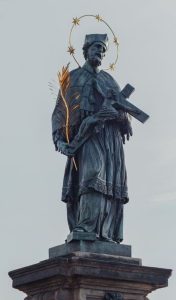
statue of St. John

St. John of the Cross, a 16th-century Spanish mystic and Carmelite friar, understood this darkness not as punishment but as purification. In his wisdom, the dark night is God’s gentle but radical work of stripping away our attachments to spiritual consolations, the warm feelings, the emotional highs, the sense of God’s nearness that we so easily come to depend upon. When these consolations are withdrawn, we are left to discover something deeper: not the gifts of God, but God Himself.

This tradition echoes through the centuries. The anonymous author of The Cloud of Unknowing wrote of the “darkness” that comes between the soul and God, a cloud that cannot be pierced by intellect but only by love. St. Teresa of Ávila described her own seasons of aridity, where prayer felt like “walking through a desert.” Even the Psalms—Israel’s ancient prayer book—are filled with cries of abandonment: “My God, my God, why have you forsaken me?” (Psalm 22:1).

page showing Psalm 23

In the Anglican tradition, which shapes the spiritual life of the CEEC, this understanding of spiritual dryness is woven into the rhythms of the Book of Common Prayer. The liturgical calendar itself acknowledges the need for seasons of waiting and lament—Advent’s longing, Lent’s austerity—reminding us that faith is not a constant mountaintop experience but a pilgrimage through valleys and deserts alike.

The dark night, then, is not a crisis of faith to be feared but a stage of transformation to be embraced. It is the crucible in which our love for God is purified of self-interest and our dependence upon Him is deepened beyond feeling.

Practical Disciplines for When God Feels Distant

When prayer feels dry and God seems far away, our natural instinct is to retreat, to wait for the feeling to return before engaging again. But the wisdom of the Christian tradition suggests the opposite: it is precisely in these seasons that we must lean more deeply into the disciplines of faith. Not to earn God’s presence, but to place ourselves where His grace can find us.

  1. Persevere in Prayer, Even When It Feels Empty. The temptation is to abandon prayer altogether when it brings no comfort. But prayer is not primarily about our feelings—it is about faithfulness. In the Book of Common Prayer, the daily offices of Morning and Evening Prayer provide a rhythm that carries us even when our hearts feel barren. The simple act of showing up, of speaking words we may not feel, is itself an act of trust. As one spiritual director put it, “Pray as you can, not as you can’t.”
  2. Return to the Scriptures as a Discipline of Listening. In seasons of dryness, the Bible can feel like a closed book. Yet it is precisely here that the ancient practice of lectio divina—slow, prayerful reading—can become a lifeline. Rather than seeking inspiration or insight, we read simply to place ourselves before God’s Word, trusting that it is “living and active” (Hebrews 4:12) even when we do not perceive its work.
  3. Embrace the Sacraments as Means of Grace. The CEEC’s emphasis on regular Eucharistic celebration is a profound gift in dry seasons. When we cannot feel God’s presence, we can taste it in the bread and wine. When our hearts are cold, we can receive the warmth of Christ’s body and blood. The sacraments do not depend upon our emotional state; they are objective means through which God imparts Himself to us. Lex orandi, lex credendi—as we pray, so we believe.
  4. Practice Silence and Solitude. The temptation in dryness is to fill the void with noise, activity, and distraction. But the mystics knew that silence is the language of God. In silence, we stop striving and simply rest in the presence of the One who never leaves us, even when we cannot feel Him. This is not emptiness but trust—a quiet act of faith that God is at work beneath the surface.
  5. Engage in Community. Spiritual dryness can make us want to withdraw from others. But the CEEC’s commitment to “shared prayerful study of the Scriptures in conversation with the wisdom of the saints” reminds us that we are not meant to walk this path alone. A trusted friend, a small group, a spiritual director—these companions on the journey can hold us up when we cannot hold ourselves up.
  6. Serve Others. Sometimes the quickest way out of our own spiritual fog is to turn our eyes outward. Bridges of Hope, the international charity founded by Daniel Zopoula, exemplifies this principle: in serving the poor and marginalised, we often encounter Christ in ways we least expect. As Jesus promised, we meet Him in the hungry, the thirsty, the stranger, and the prisoner (Matthew 25:35-40).
  7. Write Your Own Psalms of Lament. The psalmists did not shy away from expressing their anger, confusion, and despair before God. In dry seasons, we can follow their example. Keep a journal of your honest prayers—not polished or pretty, but raw and real. God is not offended by our lament; He welcomes it as an act of intimacy.

How Church Leaders Can Authentically Model This Struggle

Perhaps the greatest gift a spiritual leader can offer is honesty. Too often, church leaders feel the pressure to project an image of unshakeable faith, to model a constant victory that leaves no room for struggle. This not only isolates the leader but also communicates to the congregation that spiritual dryness is a shameful secret to be hidden.

Archbishop Daniel Zopoula

Archbishop Daniel Zopoula’s own story is a testament to the power of authenticity. Born in a disadvantaged community in Burkina Faso, he came to faith not through a life of ease but through hardship and perseverance. His ministry has been shaped by the reality of suffering—both his own and that of the communities he serves through Bridges of Hope. He knows what it is to walk through valleys.

  1. Leaders Must Speak Openly About Their Own Seasons of Dryness. This does not mean airing every doubt from the pulpit, but it does mean acknowledging that the spiritual life has seasons. When a pastor admits, “I have walked through dry seasons too,” the congregation breathes a collective sigh of relief. They realise they are not alone, and they are not failing.
  2. Leaders Must Model the Disciplines. It is not enough to teach about prayer, Scripture, and silence—leaders must practice them. The CEEC’s vision of a faith that is “caught” as much as it is taught means that the leader’s own hidden life with God becomes a source of life for the whole community. When a pastor’s faith is “grown through the highs and lows,” as Daniel Zopoula’s ministry demonstrates, it “spreads and inspires individuals who attend church.”
  3. Leaders Must Create Space for Lament in Worship. Many churches are uncomfortable with sadness. We sing triumphant songs, preach victorious sermons, and move briskly past the sorrowful parts of Scripture. But if the Psalms are our prayer book, then lament must have a place in our liturgy. Leaders can model this by incorporating songs of lament, prayers of honest longing, and testimonies of God’s faithfulness in darkness.
  4. Leaders Must Point to the Sacraments, Not Themselves. When a leader is in a dry season, the temptation is either to hide it or to make everything about their own experience. The wisdom of the liturgical tradition—with its regular celebration of the Eucharist, its daily offices, its ancient prayers—is that it points us away from ourselves and toward Christ. The leader who, even in dryness, faithfully administers the sacraments and leads the prayers is modelling a faith that rests not on feelings but on the faithfulness of God.
  5. Leaders Must Care for Their Own Souls. It is impossible to lead others through a desert if you are not being fed yourself. Daniel Zopoula’s commitment to ongoing spiritual disciplines—prayer, Bible study, worship, fasting—is not a luxury but a necessity for anyone in ministry. Leaders need their own spiritual directors, their own communities of accountability, their own sabbaths. The health of the congregation depends on the health of its shepherd.

A Word of Hope: Under the Wing of the Almighty

3 crosses of the crucifixion

The partridge story that Daniel Zopoula shares is a powerful image for this journey. Like the orphaned partridge chick, we may find ourselves in conditions far from ideal—cold, alone, longing for warmth. We may have our basic needs met yet still feel a deep hunger for something more. And that hunger, that restlessness, is not a sign of failure but a sign of our design. We are made to nestle under the wing of the Almighty.

In seasons of spiritual drought, when God feels distant and prayer feels dry, remember this: the wing is still there. The Father has not withdrawn it. He may be inviting you to stop seeking the feeling of His presence and to rest in the fact of it. He may be deepening your roots, purifying your love, teaching you to trust in the dark what you have known in the light.

The psalmist who cried out “My God, my God, why have you forsaken me?” also wrote, “But you are holy, enthroned on the praises of Israel” (Psalm 22:3). The grief is real, but so is the God who holds us in it.

At Miz City Church in Lethbridge and through the wider ministry of the CEEC, this truth is lived out in community. We do not walk this path alone. We walk together—through deserts and valleys, through dark nights and dry seasons—trusting that the One who called us is faithful, and that in His presence is the fullness of joy.

The wing is open. Nestle in.

Confession and Absolution: The Theology and Practice of Corporate vs. Private Confession and Priestly Absolution in the CEEC

One of the most profound gifts Christ has bestowed upon His Church is the ministry of reconciliation. The Apostle Paul writes, “All this is from God, who through Christ reconciled us to himself and gave us the ministry of reconciliation” (2 Corinthians 5:18). This ministry, the forgiveness of sins, lies at the very heart of the Gospel. Yet how this ministry is exercised, who may exercise it, and in what forms it is offered has been a subject of theological reflection and pastoral practice throughout the history of the Church.

In the Communion of Evangelical Episcopal Churches (CEEC), we stand within the Anglican tradition, holding together the catholic, evangelical, and charismatic streams of the Christian faith. As Archbishop of the CEEC in Canada, I have had the privilege of shepherding God’s people through the sacred mysteries of confession and absolution, witnessing firsthand the healing power of this sacrament. The CEEC affirms the Great Tradition, as expressed in the ancient rule of faith and the Nicene Creed, along with the apostolic teachings, ministries, spiritualities, and practices that have shaped the Church through the ages.

This article explores the theology and practice of confession and absolution as understood and lived out within the CEEC, with particular attention to the relationship between corporate and private confession, and the nature of priestly absolution.

The Biblical and Theological Foundations

The practice of confession and absolution is rooted in Scripture and the life of the early Church. Our Lord Jesus Christ, after His resurrection, breathed on His disciples and said, “Receive the Holy Spirit. If you forgive the sins of any, they are forgiven them; if you withhold forgiveness from any, it is withheld” (John 20:22-23). This commissioning established a ministerial authority for the forgiveness of sins that has been entrusted to the Church through the ages.

man in pews of confessional

The New Testament recognizes both a corporate and an individual dimension to confession. The Epistle of James exhorts believers: “Confess your sins to one another and pray for one another, that you may be healed” (James 5:16). This passage has been understood in the Anglican tradition as supporting both the general confession of the congregation and the private confession of individual penitents.

The CEEC, as a convergence communion, embraces the fullness of this biblical witness. We do not pit the evangelical emphasis on a personal relationship with Jesus Christ against the catholic appreciation for sacramental means of grace. Rather, we see them as complementary expressions of the one Gospel. The forgiveness of sins is always God’s work, yet God chooses to work through human instruments, through the Church, and through the ordained ministry.

Corporate Confession and Absolution

The regular worship of the Church includes corporate confession of sin and the declaration of absolution. This is the form of confession most familiar to CEEC congregations, as it is in the broader Anglican tradition.

The General Confession

In the orders of the Book of Common Prayer, the congregation gathers to confess their sins together. This is not merely a ritual recitation but a genuine act of penitence in which each worshipper acknowledges their sinfulness before God and the community. The General Confession is spoken in the first person plural: “We have erred and strayed from thy ways like lost sheep”. This corporate language reminds us that sin is not merely a private matter but affects the entire Body of Christ. We sin against God and against one another, and we seek forgiveness together.

The corporate confession typically follows an examination of conscience, with a time of silence for personal reflection. Each person names their sins inwardly, even as the congregation voices a common prayer of penitence. In this way, the corporate confession honors both the communal and the personal dimensions of repentance.

The Declaratory Absolution

bible bread and wine

Following the General Confession, the priest pronounces the absolution. In the Anglican tradition, this is understood as a declaratory act, the priest declares God’s forgiveness to those who truly repent and believe the Gospel. The words of absolution are not the priest’s own but are spoken in Christ’s name and by His authority.

This is an act of authority, by virtue of the power and commandment of God to His ministers. The priest, standing as an ambassador of Christ, announces the remission of sins to the penitent congregation. This is not a mere formality but a genuine means of grace through which the faithful receive the assurance of God’s pardon.

The Value of Corporate Confession

Corporate confession serves several vital purposes in the life of the Church. First, it reminds us that we are not alone in our sinfulness, we stand with the whole people of God, confessing our common need for mercy. Second, it nourishes humility, as we kneel alongside fellow believers and acknowledge our failings. Third, it strengthens the unity of the Body, as we receive forgiveness together and are reconciled both to God and to one another.

The CEEC, like the broader Anglican tradition, affirms that regular corporate confession and absolution in the context of public worship is the normative experience of forgiveness for most Christians. Through the regular celebration of the Eucharist and the daily offices, the faithful are continually reminded of God’s grace and mercy.

Private Confession and Absolution

Alongside the corporate confession, the CEEC also provides for private confession, the Reconciliation of a Penitent. This is a pastoral rite in which an individual confesses their sins to God in the presence of a priest and receives the assurance of pardon and the grace of absolution.

The Nature of Private Confession

Private confession is not a requirement for all Christians but is available for all who desire it. It is particularly helpful for those whose consciences are burdened by serious sin, those who seek spiritual counsel and direction, or those who desire the assurance of God’s forgiveness in a more personal form.

The Book of Common Prayer provides forms for the Reconciliation of a Penitent, and these have been adapted and adopted within the CEEC. The rite involves several elements:

man repenting with sunset behind
  • The Preparation: The penitent examines their conscience and prepares to confess their sins with contrition.
  • The Confession: The penitent confesses their sins to God in the presence of the priest. The confession is made freely and with humility.
  • The Counsel: The priest offers spiritual counsel and encouragement, helping the penitent to understand their sins and to grow in holiness.
  • The Penance: The priest may suggest a penance, a prayer, an act of charity, or some other expression of repentance, as a response to God’s forgiveness.
  • The Absolution: The priest pronounces absolution, declaring God’s forgiveness in Christ’s name.

The Seal of Confession

The secrecy of confession is morally absolute for the confessor and must under no circumstances be broken. The content of a confession is not a matter of subsequent discussion. This seal of confession is essential for maintaining the trust and safety of the penitent, allowing them to confess freely without fear of exposure.

The CEEC upholds this sacred obligation with the utmost seriousness. The priest who hears confessions is bound by the seal of confession, just as in the historic Anglican and catholic traditions.

Who May Hear Confessions?

hand extending toward light through a window

In the CEEC, any Christian may hear a confession in the sense of listening to a brother or sister in Christ. However, only a priest or bishop may pronounce the priestly absolution. This reflects the understanding that the authority to forgive sins has been entrusted by Christ to the ordained ministry.

A deacon or lay person may use a “declaration of forgiveness” in certain circumstances, but this is distinct from the authoritative absolution pronounced by a priest or bishop. The distinction is not about the worthiness of the minister but about the order and authority Christ has established in His Church.

The Theology of Priestly Absolution

The question of priestly absolution has been a point of theological reflection and, at times, controversy in the history of the Church. Within the CEEC, we affirm both the reality of priestly absolution and its proper limitations.

Christ the One Absolver

First and foremost, we affirm that Christ alone is the one who forgives sins. The priest does not forgive sins in their own right or by their own power. Rather, the priest is an instrument of Christ, the One Absolver. The absolution is pronounced in Christ’s name and by His authority, not by the priest’s own authority.

This understanding is reflected in the words of absolution used in the Anglican tradition: “Our Lord Jesus Christ, who has left power to his Church to absolve all sinners who truly repent and believe in him, of his great mercy forgive thee thine offences”. The priest’s role is to declare what Christ has already accomplished, to announce the forgiveness that is freely given in the Gospel.

The Authority of the Church

At the same time, we affirm that Christ has entrusted this ministry of reconciliation to His Church. The power to forgive sins was given to the apostles and, through them, to their successors in the ordained ministry. This is not a power that the Church invented or assumed but a gift that Christ bestowed.

The CEEC, as a communion rooted in the Anglican tradition, affirms the historic threefold ministry of bishops, priests, and deacons. It is through this ordered ministry that the Church exercises the authority Christ has given her, including the authority to pronounce absolution.

The Efficacy of Absolution

The absolution pronounced by the priest is efficacious, it actually conveys God’s forgiveness to the penitent. This is not because of the priest’s personal holiness but because of Christ’s faithfulness to His promise. When the Church, through her ordained ministers, declares God’s forgiveness, that declaration is trustworthy and true.

This does not mean that absolution works automatically or magically. The penitent must come with genuine contrition, a desire for forgiveness, and a resolve to amend their life. The sacrament requires the active participation of the penitent, repentance, confession, and the intention to make satisfaction.

Corporate and Private Confession: Complementary, Not Competing

Within the CEEC, we do not see corporate and private confession as competing alternatives but as complementary expressions of the one ministry of reconciliation. Each has its proper place and serves distinct pastoral needs.

woman confessing in private

The Normative and the Exceptional

Corporate confession is the normative experience of forgiveness for most Christians. Through the regular worship of the Church, the faithful confess their sins together and hear the declaration of God’s forgiveness. This is sufficient for ordinary Christian living and growth in holiness.

Private confession is available for those who desire it, whether because of particular sins that burden the conscience, a need for spiritual counsel, or a longing for a more personal encounter with God’s mercy. It is exceptional in the sense that it is not required of all, but it is available to all who seek it.

The Both/And Vision of the CEEC

The CEEC embraces what might be called a “both/and” vision of the Christian life. We hold together the catholic, evangelical, and charismatic streams of the faith. In the matter of confession and absolution, this means we value both the corporate and the private, both the general and the particular, both the communal and the personal.

We do not reduce confession to a private transaction between the individual and God, nor do we reduce it to a mere corporate ritual. We recognize that sin has both personal and communal dimensions, and so forgiveness must address both. We confess our sins together as a congregation, and we may also confess them privately to a priest. Both forms are gifts of the Church, both are means of grace, and both lead us to the same place: the merciful heart of God.

Pastoral Practice in the CEEC

In the CEEC, the practice of confession and absolution is guided by pastoral wisdom and the liturgical traditions of the Church. The following principles inform our pastoral practice:

Accessibility

Confession should be accessible to all who desire it. The Reconciliation of a Penitent may be heard anytime and anywhere. It need not be confined to a particular place or time. The priest should be available to hear confessions, whether in a church building, a private home, or another setting.

Freedom

man praying silently

Confession is voluntary. No one is required to make a private confession. The Church does not compel the faithful to confess their sins to a priest, nor does she discourage those who seek this ministry. The freedom of the penitent is respected at all times.

Discretion

The priest who hears confessions must exercise the utmost discretion. The seal of confession is absolute. The priest must not betray a penitent in any way, by words or otherwise, for any cause whatsoever.

Pastoral Care

Private confession is not merely about the forgiveness of sins but also about pastoral care. The priest offers counsel, encouragement, and guidance to the penitent. The priest may suggest a penance, but this is not a punishment, it is a means of growth in holiness and a response to God’s grace.

Conclusion

The ministry of confession and absolution is a gift of Christ to His Church. Through both corporate and private confession, the faithful receive the assurance of God’s forgiveness and are reconciled to God and to one another. In the CEEC, we embrace the fullness of this gift, holding together the catholic, evangelical, and charismatic streams of the Christian faith.

As Archbishop of the CEEC in Canada, I have seen the transformative power of this ministry in the lives of countless believers. I have witnessed the healing of wounded consciences, the restoration of broken relationships, and the deepening of faith through the grace of absolution. I commend this ministry to all who seek God’s mercy and desire to grow in holiness.

The ancient adage Lex Orandi, lex credendi reminds us that our beliefs are inextricably linked to our activities, particularly prayer. In the practice of confession and absolution, the Church prays and believes that God, through Christ, reconciles the world to Himself. May we, as the people of God, continue to receive this gift with gratitude and extend it to others with love.