There comes a season in the life of nearly every believer when the heavens seem to close. The words of prayer that once rose effortlessly now fall flat. The Scriptures that once burned with meaning feel like distant echoes. Worship, once a wellspring of joy, becomes a discipline of sheer endurance. If you find yourself in such a wilderness, know this: you are not alone, you are not failing, and you have not been abandoned.
At Miz City Church in Lethbridge, Alberta, where Archbishop Daniel Zopoula shepherds a congregation rooted in the rich tradition of the Communion of Evangelical Episcopal Churches (CEEC), spiritual dryness is not a topic to be avoided but a journey to be understood. As Daniel often reminds those he teaches, a genuine faith is not one that has never faced uncertainty, but one that has “grown through the highs and lows of life.” The dry seasons, painful as they are, can become the very ground where deeper roots of intimacy with God take hold.
Understanding the “Dark Night of the Soul” in Christian Tradition
The experience of spiritual dryness is not a modern crisis, nor is it a sign of spiritual failure. For centuries, Christian mystics and theologians have written about what St. John of the Cross famously called the “dark night of the soul”—a period of profound spiritual desolation in which God seems utterly absent.
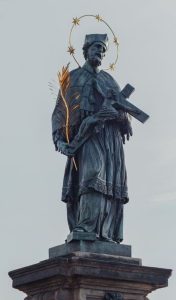
St. John of the Cross, a 16th-century Spanish mystic and Carmelite friar, understood this darkness not as punishment but as purification. In his wisdom, the dark night is God’s gentle but radical work of stripping away our attachments to spiritual consolations, the warm feelings, the emotional highs, the sense of God’s nearness that we so easily come to depend upon. When these consolations are withdrawn, we are left to discover something deeper: not the gifts of God, but God Himself.
This tradition echoes through the centuries. The anonymous author of The Cloud of Unknowing wrote of the “darkness” that comes between the soul and God, a cloud that cannot be pierced by intellect but only by love. St. Teresa of Ávila described her own seasons of aridity, where prayer felt like “walking through a desert.” Even the Psalms—Israel’s ancient prayer book—are filled with cries of abandonment: “My God, my God, why have you forsaken me?” (Psalm 22:1).

In the Anglican tradition, which shapes the spiritual life of the CEEC, this understanding of spiritual dryness is woven into the rhythms of the Book of Common Prayer. The liturgical calendar itself acknowledges the need for seasons of waiting and lament—Advent’s longing, Lent’s austerity—reminding us that faith is not a constant mountaintop experience but a pilgrimage through valleys and deserts alike.
The dark night, then, is not a crisis of faith to be feared but a stage of transformation to be embraced. It is the crucible in which our love for God is purified of self-interest and our dependence upon Him is deepened beyond feeling.
Practical Disciplines for When God Feels Distant
When prayer feels dry and God seems far away, our natural instinct is to retreat, to wait for the feeling to return before engaging again. But the wisdom of the Christian tradition suggests the opposite: it is precisely in these seasons that we must lean more deeply into the disciplines of faith. Not to earn God’s presence, but to place ourselves where His grace can find us.
- Persevere in Prayer, Even When It Feels Empty. The temptation is to abandon prayer altogether when it brings no comfort. But prayer is not primarily about our feelings—it is about faithfulness. In the Book of Common Prayer, the daily offices of Morning and Evening Prayer provide a rhythm that carries us even when our hearts feel barren. The simple act of showing up, of speaking words we may not feel, is itself an act of trust. As one spiritual director put it, “Pray as you can, not as you can’t.”
- Return to the Scriptures as a Discipline of Listening. In seasons of dryness, the Bible can feel like a closed book. Yet it is precisely here that the ancient practice of lectio divina—slow, prayerful reading—can become a lifeline. Rather than seeking inspiration or insight, we read simply to place ourselves before God’s Word, trusting that it is “living and active” (Hebrews 4:12) even when we do not perceive its work.
- Embrace the Sacraments as Means of Grace. The CEEC’s emphasis on regular Eucharistic celebration is a profound gift in dry seasons. When we cannot feel God’s presence, we can taste it in the bread and wine. When our hearts are cold, we can receive the warmth of Christ’s body and blood. The sacraments do not depend upon our emotional state; they are objective means through which God imparts Himself to us. Lex orandi, lex credendi—as we pray, so we believe.
- Practice Silence and Solitude. The temptation in dryness is to fill the void with noise, activity, and distraction. But the mystics knew that silence is the language of God. In silence, we stop striving and simply rest in the presence of the One who never leaves us, even when we cannot feel Him. This is not emptiness but trust—a quiet act of faith that God is at work beneath the surface.
- Engage in Community. Spiritual dryness can make us want to withdraw from others. But the CEEC’s commitment to “shared prayerful study of the Scriptures in conversation with the wisdom of the saints” reminds us that we are not meant to walk this path alone. A trusted friend, a small group, a spiritual director—these companions on the journey can hold us up when we cannot hold ourselves up.
- Serve Others. Sometimes the quickest way out of our own spiritual fog is to turn our eyes outward. Bridges of Hope, the international charity founded by Daniel Zopoula, exemplifies this principle: in serving the poor and marginalised, we often encounter Christ in ways we least expect. As Jesus promised, we meet Him in the hungry, the thirsty, the stranger, and the prisoner (Matthew 25:35-40).
- Write Your Own Psalms of Lament. The psalmists did not shy away from expressing their anger, confusion, and despair before God. In dry seasons, we can follow their example. Keep a journal of your honest prayers—not polished or pretty, but raw and real. God is not offended by our lament; He welcomes it as an act of intimacy.
How Church Leaders Can Authentically Model This Struggle
Perhaps the greatest gift a spiritual leader can offer is honesty. Too often, church leaders feel the pressure to project an image of unshakeable faith, to model a constant victory that leaves no room for struggle. This not only isolates the leader but also communicates to the congregation that spiritual dryness is a shameful secret to be hidden.

Archbishop Daniel Zopoula’s own story is a testament to the power of authenticity. Born in a disadvantaged community in Burkina Faso, he came to faith not through a life of ease but through hardship and perseverance. His ministry has been shaped by the reality of suffering—both his own and that of the communities he serves through Bridges of Hope. He knows what it is to walk through valleys.
- Leaders Must Speak Openly About Their Own Seasons of Dryness. This does not mean airing every doubt from the pulpit, but it does mean acknowledging that the spiritual life has seasons. When a pastor admits, “I have walked through dry seasons too,” the congregation breathes a collective sigh of relief. They realise they are not alone, and they are not failing.
- Leaders Must Model the Disciplines. It is not enough to teach about prayer, Scripture, and silence—leaders must practice them. The CEEC’s vision of a faith that is “caught” as much as it is taught means that the leader’s own hidden life with God becomes a source of life for the whole community. When a pastor’s faith is “grown through the highs and lows,” as Daniel Zopoula’s ministry demonstrates, it “spreads and inspires individuals who attend church.”
- Leaders Must Create Space for Lament in Worship. Many churches are uncomfortable with sadness. We sing triumphant songs, preach victorious sermons, and move briskly past the sorrowful parts of Scripture. But if the Psalms are our prayer book, then lament must have a place in our liturgy. Leaders can model this by incorporating songs of lament, prayers of honest longing, and testimonies of God’s faithfulness in darkness.
- Leaders Must Point to the Sacraments, Not Themselves. When a leader is in a dry season, the temptation is either to hide it or to make everything about their own experience. The wisdom of the liturgical tradition—with its regular celebration of the Eucharist, its daily offices, its ancient prayers—is that it points us away from ourselves and toward Christ. The leader who, even in dryness, faithfully administers the sacraments and leads the prayers is modelling a faith that rests not on feelings but on the faithfulness of God.
- Leaders Must Care for Their Own Souls. It is impossible to lead others through a desert if you are not being fed yourself. Daniel Zopoula’s commitment to ongoing spiritual disciplines—prayer, Bible study, worship, fasting—is not a luxury but a necessity for anyone in ministry. Leaders need their own spiritual directors, their own communities of accountability, their own sabbaths. The health of the congregation depends on the health of its shepherd.
A Word of Hope: Under the Wing of the Almighty
The partridge story that Daniel Zopoula shares is a powerful image for this journey. Like the orphaned partridge chick, we may find ourselves in conditions far from ideal—cold, alone, longing for warmth. We may have our basic needs met yet still feel a deep hunger for something more. And that hunger, that restlessness, is not a sign of failure but a sign of our design. We are made to nestle under the wing of the Almighty.
In seasons of spiritual drought, when God feels distant and prayer feels dry, remember this: the wing is still there. The Father has not withdrawn it. He may be inviting you to stop seeking the feeling of His presence and to rest in the fact of it. He may be deepening your roots, purifying your love, teaching you to trust in the dark what you have known in the light.
The psalmist who cried out “My God, my God, why have you forsaken me?” also wrote, “But you are holy, enthroned on the praises of Israel” (Psalm 22:3). The grief is real, but so is the God who holds us in it.
At Miz City Church in Lethbridge and through the wider ministry of the CEEC, this truth is lived out in community. We do not walk this path alone. We walk together—through deserts and valleys, through dark nights and dry seasons—trusting that the One who called us is faithful, and that in His presence is the fullness of joy.
The wing is open. Nestle in.
Leave a Reply